
Let’s be honest—creating content sounds easier than it actually is.You open your laptop, stare at a blank screen, and think, “Okay… what am I. Content Creation today?”We’ve allMaybe you have a great idea but can’t figure out how to explain it. Maybe you keep creating posts but nobody seems to notice them. Or perhaps you’re constantly wondering what kind of content people actually want to read, watch, or share.That’s where content creation becomes more than simply posting something online.Good content starts with an idea, but it grows through understanding people, solving problems, telling stories, and consistently showing upWhether you’re a beginner, blogger, business owner, freelancer, marketer, or aspiring creator, learning how to create useful content can help you build trust, attract an audience, and grow online.And no, you don’t need a fancy camera or a huge budget to get started.Sometimes, a clear idea and a genuine understanding of your audience are worth far more.
What Is Content Creation?
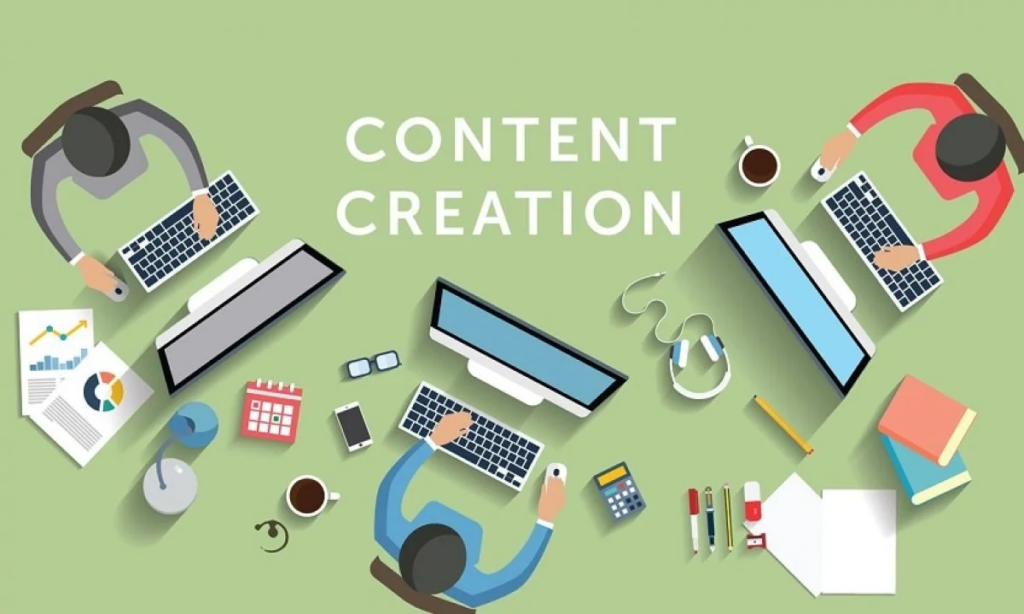
Content creation is the process of coming up with ideas, creating useful or entertaining material, and sharing it with an audience.That content can take many forms.You might write a blog post in the morning, create an Instagram post in the afternoon, record a video in the evening, or send an email to your subscribersContent isn’t limited to one platform.
| Type of Content | Examples |
|---|---|
| Blog Content | Articles, guides, tutorials, listicles |
| Social Media | Posts, carousels, stories, reels |
| Video | Tutorials, interviews, vlogs, explainers |
| Audio | Podcasts, interviews, audio guides |
| Newsletters, updates, educational emails | |
| Visual Content | Infographics, illustrations, charts |
| Educational Content | How-to guides, courses, checklists |
| User-Generated Content | Reviews, testimonials, customer stories |
At its heart, content creation is about communicating something valuable to someone else.That’s the part people sometimes forget.You’re not creating content just because the internet expects another post.You’re creating it because someone, somewhere, might find it useful, interesting, helpful, or entertaining.
Why Does Content Creation Matter?
Think about the last time you searched for something online.Maybe you wanted to know how to fix a problem, choose a product, learn a skill, cook a recipe, or understand something confusing.What did you look for?Content.A helpful article.A video.A tutorial.A social media post.A review.A simple explanation.Businesses and creators use content for the same reason: to become useful before asking people to take action.Good content can help you:
- Build trust
- Increase brand awareness
- Attract website visitors
- Educate potential customers
- Build a loyal audience
- Generate leads
- Support SEO
- Encourage engagement
- Establish authority
- Increase sales over time
- But here’s the important part:Content doesn’t work simply because you publish it.It works when it connects with the right people.
Start With Your Audience, Not Your Content

One of the biggest mistakes beginners make is asking:“What should I post?”A better question is:What does my audience need?”That small change can completely change your content strategy.Imagine you run a fitness website.You could write:0 Fitness Tips.”hat’s okay.But what if your audience consists of busy people who struggle to exercise consistently?Now you could create:10 Easy Fitness Habits for People Who Don’t Have Time for the Gym.”hat’s much more specific.It speaks directly to a real problem.Before creating content, think about:
- Who am I helping?
- What are they struggling with?
- What questions do they ask?
- What are they trying to achieve?
- What confuses them?
- What would make their life easier?
| Weak Content Idea | Audience-Focused Idea |
|---|---|
| Marketing Tips | Marketing Tips for Small Businesses |
| Healthy Food | Easy Healthy Meals for Busy People |
| Travel Guide | Budget Travel Tips for First-Time Travelers |
| Productivity | Simple Productivity Habits for Remote Workers |
| Skincare | Beginner Skincare Routine for Sensitive Skin |
Specific content usually feels more personal.
And people respond to content that feels like it was written for them.
Find Content Ideas Everywhere
You don’t need to sit in front of a blank page waiting for inspiration to magically appear.
Ideas are everywhere.
Listen to the questions people ask.
Read comments.
Look at customer reviews.
Pay attention to conversations.
Check what people search for.
Notice your own problems.
Your everyday experiences can become content ideas.
For example, imagine you spend an hour trying to solve a technical problem.
Once you figure it out, you could simply move on.
Or you could think:
“Someone else is probably struggling with this too.”
Now you have a content idea.
That’s one of the best ways to create genuinely useful content—solve a problem you’ve already experienced yourself.
Create Content That Solves a Problem

People don’t usually wake up thinking:
“I hope I see some content today.”
They wake up thinking:
“I need to solve this.”
Maybe they need more customers.
Maybe they want to lose weight.
Maybe they don’t know how to use a tool.
Maybe they’re planning a trip.
Maybe they’re trying to learn something new.
Your content becomes valuable when it helps them move from “I don’t know” to “Now I understand.”
A useful content formula is:
Problem → Explanation → Solution → Action
For example:
Problem: “I don’t know what to post on social media.”
Explanation: Explain why content ideas run out.
Solution: Give a list of practical idea-generation methods.
Action: Encourage the reader to create a simple content bank.
Simple.
Useful.
Human.
Don’t Try to Sound Too Perfect
This is something many new writers struggle with.
They think professional content needs to sound extremely formal.
So instead of writing:
“Here’s what actually worked for me…”
they write:
“The following methodology demonstrates significant effectiveness…”
And suddenly the article sounds like it was written by a committee.
People don’t talk like that.
Write the way you would explain something to an intelligent friend.
You can still be professional without sounding robotic.
Use natural phrases.
Share small observations.
Ask questions.
Tell short stories.
Admit when something is difficult.
Say “you” when you’re speaking directly to the reader.
The goal isn’t to make your writing less intelligent.
It’s to make it more human.
Tell Stories Instead of Only Sharing Facts

Facts are useful.
But stories make people care.
Think about it.
Which sounds more memorable?
“Consistency is important for content creation.”
Or:
“For three months, I kept posting whenever I felt inspired. Some weeks I posted five times. Other weeks, nothing. Eventually, I realized my biggest problem wasn’t a lack of ideas—it was having no system.”
The second one feels real.
That’s because there’s a human experience behind it.
You don’t need dramatic stories.
Small stories work too.
Talk about a mistake.
Talk about something you learned.
Talk about what surprised you.
Talk about what didn’t work.
Real experiences give content a heartbeat.
Focus on Value Before Going Viral
Everyone wants content to go viral.Of course.here’s nothing wrong with that.But chasing viral numbers can make you forget the person reading your content.A post doesn’t have to reach a million people to be successful.If it helps 100 people solve a real problem, that’s meaningful.f one reader saves your article and comes back later, that’s valuable.If someone shares it with a friend because they found it genuinely helpful, you’ve created something worthwhile.hink about content this way:
| Goal | Better Question |
|---|---|
| More views | Did I create something people want to see? |
| More likes | Did my content make people feel something? |
| More shares | Is this useful enough to pass along? |
| More traffic | Does the content answer a real search? |
| More sales | Did I build enough trust first? |
Numbers matter, but meaning matters too.
Make Your Content Easy to Read
Even great information can lose people if it’s difficult to read.
Nobody wants to open an article and see a giant wall of text.
Break your content into:
- Short paragraphs
- Clear headings
- Bullet points
- Tables
- Examples
- Bold key ideas
- Images where useful
- Simple explanations
Think about how people actually read online.
They scan first.
Then they decide whether something deserves their attention.
That’s why clear structure matters.
Use SEO Without Making Your Writing Sound Robotic
SEO can help people discover your content through search engines.But don’t write for search engines alone.Write for humans first.nstead of forcing the same keyword into every paragraph, use related words naturally.For example, if your main keyword is content creation, related phrases might include:
- Content creation tips
- Content strategy
- Content ideas
- Content marketing
- Creating engaging content
- Content creation tools
- Content planning
- Content writing
- Social media content
- Content creator
Use them where they make sense.
Don’t force them.
A sentence that sounds unnatural just to include a keyword isn’t helping anyone.
Good SEO should feel invisible to the reader.
Build a Simple Content Creation Process

You don’t need a complicated system.
A simple workflow can keep you moving.
Step 1: Research
Understand the topic and what people actually want to know.
Step 2: Choose Your Angle
Don’t simply repeat what everyone else has already said.
Find your perspective.
Step 3: Create an Outline
Write down your main points before starting.
Step 4: Create the First Draft
Don’t try to make every sentence perfect.
Get your ideas out.
Step 5: Edit
Remove unnecessary words, improve clarity, and check your facts.
Step 6: Add Visuals
Use relevant images, charts, screenshots, or graphics when they genuinely help.
Step 7: Optimize
Add a useful title, headings, keywords, meta information, and internal links where appropriate.
Step 8: Publish
Eventually, you have to stop editing and let the content go.
Step 9: Promote
Share it through relevant channels.
Step 10: Learn From Results
Look at what worked and what didn’t.
Then improve the next piece.
| Stage | Main Question |
|---|---|
| Research | What does my audience need? |
| Planning | What angle will I take? |
| Writing | Am I providing useful information? |
| Editing | Is this clear and easy to understand? |
| Publishing | Is everything ready? |
| Promotion | How will people discover it? |
| Analysis | What can I improve next time? |
This process isn’t glamorous.
But honestly, simple systems are often what keep creators consistent.
Create Different Types of Content

Don’t put all your effort into one format.Different people prefer different ways of learning.Some people love reading.Others would rather watch a five-minute video.Some want a quick checklist.Others enjoy a detailed podcast.You can even turn one strong idea into several pieces of content.For example:
One blog post →
- Instagram carousel
- Short video
- Email newsletter
- Infographic
- LinkedIn post
- Short social media tips
- Podcast discussion
This is called content repurposing.It saves time and helps you reach people in different places.
Consistency Is More Important Than Perfection

This is probably one of the hardest lessons for creators.You want every article to be amazing.Every video should look perfect.very social post should get thousands of views.But that mindset can stop you from publishing anything.Sometimes you have to create the thing, learn from it, and move forward.Your first ten pieces of content may not be great.That’s normal.Your next ten will probably be better.Then you’ll look back at your early work and thinkWow, I’ve improved.”That’s the point.Content creation is a skill.And skills grow through practice, feedback, and repetition.
Common Content Creation Mistakes
Even experienced creators make mistakes.
Here are some common ones:
| Mistake | Better Approach |
|---|---|
| Creating without knowing the audience | Define your target reader first |
| Chasing every trend | Focus on useful, relevant topics |
| Writing only for algorithms | Write for real people |
| Copying competitors | Add your own experience and perspective |
| Trying to be perfect | Publish, learn, and improve |
| Ignoring headlines | Spend time creating strong titles |
| Making content too broad | Solve a specific problem |
| Giving up too quickly | Give your strategy time to work |
| Ignoring analytics | Use data to understand your audience |
| Posting randomly | Create a simple content calendar |
The goal isn’t to avoid every mistake.
The goal is to learn from the mistakes you make.
Create a Content Calendar

If you constantly ask yourself, “What should I post today?”, a content calendar can make life much easier.
It doesn’t need to be complicated.
A simple spreadsheet is enough.
| Day | Content Type | Topic | Goal |
|---|---|---|---|
| Monday | Blog | Beginner Guide | Educate |
| Tuesday | Social Post | Quick Tip | Engage |
| Wednesday | Video | How-To Tutorial | Teach |
| Thursday | Useful Resource | Build Trust | |
| Friday | Social Post | Personal Story | Connect |
You can plan a week or a month at a time.
But don’t become obsessed with planning.
Leave room for spontaneous ideas too.
Sometimes the best content comes from something that just happened yesterday.
Measure What Actually Matters
After publishing content, don’t simply look at views and move on.Look deeper.Ask:
- How long did people stay?
- Did they click another page?
- Did they save or share the content?
- Did they leave comments?
- Did they sign up?
- Did they buy something?
- Which topics performed best?
- Where did visitors come from?
These numbers can tell you a story.Maybe your audience doesn’t care much about generic tips but loves detailed tutorials.Maybe short videos perform better than long ones.aybe one particular topic keeps bringing visitors months after publication.our analytics aren’t just numbers—they’re clues.Use them to understand what your audience wants.
Use AI and Tools Carefully

Technology has made content creation fasterI tools can help with brainstorming, outlining, research assistance, editing, summarizing, and repetitive tasks.Design tools can make visuals easier.Scheduling tools can help you stay organized.Analytics platforms can show you what’s working.But tools shouldn’t replace your voice, judgment, experience, or creativity.If everyone uses the same tool and publishes the same generic ideas, the internet becomes a very boring place.Use technology to make your work easier.Then add something technology can’t automatically provide:your experience, your opinion, your observations, and your human perspective.
FAQ’S
1. What is content creation?
Content creation is the process of planning, creating, and sharing useful or entertaining content such as blog posts, videos, social media posts, podcasts, emails, and graphics.
2. Why is coNtent creation important?
Content creation helps businesses and creators build trust, reach the right audience, share knowledge, and grow their online presence. Good content can also bring traffic and potential customers.
3. How do I start content creation as a beginner?
Start with a topic you understand or genuinely enjoy. Choose your audience, find their common questions, pick a content format, and start creating. You don’t need expensive equipment to begin
4. What makes good content?
Good content should be useful, clear, relevant, original, and easy to understand. Most importantly, it should give the reader or viewer a reason to stay, learn, or take action.
5. How do I find content ideas?
Look at questions your audience asks, customer problems, online discussions, search suggestions, reviews, industry trends, and your own experiences. Your everyday problems can become surprisingly good content ideas.