
Affiliate marketing sounds simple on the surface: recommend a product, someone buys it, and you earn a commission. But anyone who has tried it knows there is more to it than dropping a few links into a blog post and waiting for money to appearSuccessful affiliate marketing is really about trust, useful content, and choosing the right products for the right audience. When you genuinely help someone solve a problem, your recommendations feel natural rather than forced.Whether you are a blogger, content creator, website owner, or beginner looking for an online income stream, affiliate marketing can become a useful part of your digital business.Let’s look at how it works, what strategies actually matter, and how you can build an approach that feels helpful, honest, and sustainable.
What Is Affiliate Marketing?

Affiliate marketing is a performance-based marketing model where you promote another company’s product or service and receive a commission when someone completes a qualifying action through your unique affiliate link.That action is often a purchase, although some programs pay for leads, sign-ups, app downloads, or other conversions.The basic process is straightforward:You → Recommend a product → Someone clicks your link → They complete the required action → You earn a commissionFor example, imagine you run a blog about blogging. You write an article about useful blogging tools and naturally recommend a hosting service, writing tool, or SEO platform. If a reader clicks your affiliate link and makes a qualifying purchase, you may receive a commission.
| Person | Role |
|---|---|
| Merchant | Creates and sells the product |
| Affiliate | Promotes the product |
| Customer | Purchases or completes an action |
| Affiliate Network | May manage tracking and payments |
The important part is that your income depends on results, not simply on publishing links.
How Does Affiliate Marketing Work?
Affiliate programs generally provide you with a unique tracking link. This link tells the merchant that a visitor came through your recommendation.When someone clicks the link, tracking technology may record the referral. If that visitor completes the required action under the program’s terms, the affiliate can receive a commission.However, the exact rules vary between programs.Some programs offer a percentage of a sale, while others offer a fixed payment. Some have short tracking periods, while others may provide longer attribution windows.Before promoting anything, read the affiliate program’s commission structure, payment rules, cookie or attribution period, and promotional restrictions.
Why Is Affiliate Marketing Popular?
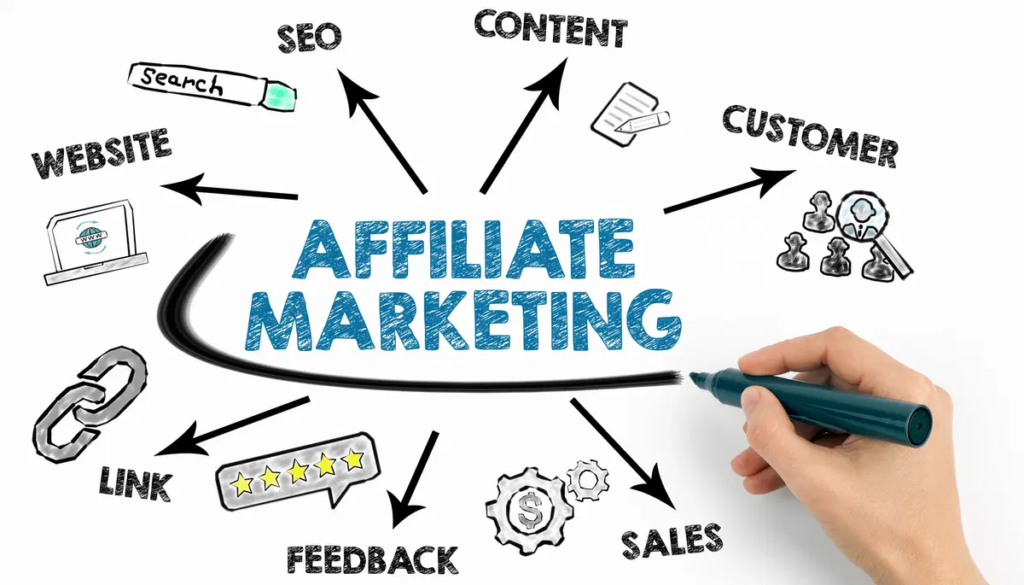
One reason affiliate marketing attracts beginners is that you don’t necessarily need to create your own product.
You can start by recommending products that are already available.
There may also be relatively low startup costs compared with building a traditional business. Your main investment is usually your time, content, research, and audience-building efforts.
But this does not mean affiliate marketing is effortless.
The difficult part is getting the right people to notice your content and trust your recommendations.
A website with 100 useful visitors can sometimes be more valuable than a website with thousands of visitors who have no interest in the products being promoted.
Choose a Profitable Niche
Your niche has a major influence on your affiliate marketing results.
Instead of trying to promote everything, focus on a subject where you can consistently create useful and relevant content.
Good niche ideas might include:
- Technology and software
- Blogging
- Personal finance
- Fitness equipment
- Travel
- Beauty
- Home improvement
- Education
- Photography
- Business tools
A good niche usually has audience demand, relevant products, and enough content opportunities.At the same time, don’t choose a niche only because you think it will make money.If you have no interest in the subject, creating helpful content month after month can quickly become exhausting.
Find the Right Affiliate Programs
Once you have a niche, look for affiliate programs that match your audience.You can find programs directly through companies, affiliate networks, and software platforms.When comparing programs, don’t look only at the commission percentage.
Consider:
| Factor | Why It Matters |
|---|---|
| Commission | Determines potential earnings per conversion |
| Product quality | Protects your audience’s trust |
| Conversion rate | Helps indicate how well offers perform |
| Cookie/attribution period | Affects referral credit |
| Payment threshold | Determines when you can receive payment |
| Brand reputation | Influences customer confidence |
| Terms and restrictions | Tells you what promotion methods are allowed |
A high commission doesn’t automatically mean a good affiliate product.A product with a smaller commission but strong customer demand may perform better than an expensive product that few people want.
Create Content That Helps People
This is probably the most important affiliate marketing strategy.
Don’t create content simply because you have an affiliate link.
Create content because someone has a question, problem, or decision they need help with.
For example, instead of writing:
“Buy this amazing camera.”
You could create:
“Best Cameras for Beginner Photographers: Features to Look For Before Buying”Now you have an opportunity to explain different options, discuss advantages and disadvantages, and help readers make an informed choice.
Useful affiliate content can include:
- Product reviews
- Comparison articles
- Buying guides
- Tutorials
- “Best tools” lists
- Case studies
- Product alternatives
- How-to articles
- Frequently asked questions
The stronger the content, the more naturally affiliate recommendations can fit into it.
Focus on Search Intent
SEO and affiliate marketing can work well together because people often search online before making purchasing decisions.
Someone searching for “what is a camera” may simply want information.
But someone searching for “best camera for beginner photography” may be much closer to making a purchase.
Understanding search intent helps you create content that matches what people actually want.
Think about whether the person is:
- Learning something
- Comparing options
- Looking for a solution
- Researching a product
- Ready to purchase
Your content should answer that specific need rather than trying to force a sale.
Write Honest Product Reviews

Affiliate reviews should not read like advertisements.
Readers are smart. If every product you recommend is described as “perfect,” people may stop believing you.
A useful review should explain both strengths and weaknesses.
For example, you might discuss:
- What the product does well
- Who it is best for
- Who should avoid it
- Important features
- Pricing considerations
- Alternatives
- Your overall recommendation
Being honest about drawbacks can actually make your positive recommendations more believable.
Use Comparison Content
Comparison articles are particularly useful when readers are deciding between products.
For example:
Product A vs. Product B: Which Is Better for Beginners?
You can compare features, pricing, ease of use, performance, and ideal users.
| Comparison Point | Product A | Product B |
|---|---|---|
| Ease of use | Beginner-friendly | More advanced |
| Best for | New users | Experienced users |
| Price | Lower | Higher |
| Features | Essential | More advanced |
The goal isn’t necessarily to declare one product the universal winner.
Instead, explain which option makes more sense for different types of people.
Build Trust Before Asking for a Sale
People are more likely to use your recommendations when they trust you.
Trust isn’t created by adding more affiliate links.
It comes from consistent, useful information.
Answer questions honestly. Admit when you don’t know something. Update outdated information. Don’t recommend products you wouldn’t reasonably suggest to your own audience.
Think of your audience as people, not clicks.
That mindset changes the way you create content.
Don’t Overload Your Content With Affiliate Links
More links do not necessarily mean more earnings.
In fact, too many links can make an article uncomfortable to read.
Place affiliate links where they are genuinely useful and relevant.
For example, if you’re explaining a tool and the reader may want to explore it, a relevant link makes sense.
But placing the same link in every paragraph can feel pushy.
A clean article with a few well-placed recommendations often feels much more trustworthy.
Promote Affiliate Content Through Multiple Channels

Your website doesn’t have to be your only traffic source.
Depending on your niche and platform rules, you can use:
- Search engines
- YouTube
- Email newsletters
- Social media
- Online communities
- Short-form videos
The key is to adapt your content for each platform.
A detailed blog post could become a short video, a social media carousel, an email tip, or a discussion topic.
This gives one strong idea several opportunities to reach the right audience.
Track Your Affiliate Performance
If you don’t track your results, you are mostly guessing.
Look at metrics such as:
- Clicks
- Click-through rate
- Conversions
- Conversion rate
- Earnings
- Revenue per visitor
- Top-performing pages
You may discover that one article receives lots of traffic but very few clicks, while another smaller article produces regular conversions.
That information is valuable.
Instead of creating content based purely on assumptions, you can use real performance data to improve your strategy.
Common Affiliate Marketing Mistakes
Beginners often make the same mistakes.
| Mistake | Better Approach |
|---|---|
| Promoting everything | Choose relevant products |
| Focusing only on commission | Consider quality and audience fit |
| Writing thin content | Create genuinely useful resources |
| Using too many links | Add links naturally |
| Making unrealistic claims | Be honest and specific |
| Ignoring SEO | Understand search intent |
| Never updating articles | Refresh important content |
| Expecting instant income | Build gradually |
One of the biggest mistakes is expecting quick money.
Affiliate marketing can take time because you first need to build content, traffic, trust, and conversions.
Be Transparent About Affiliate Links
If you use affiliate links, clearly disclose your relationship with the companies you promote.
A simple disclosure can tell readers that you may earn a commission if they purchase through certain links, without changing their price.
Transparency isn’t something to hide at the bottom of your strategy.
It is part of building a professional relationship with your audience.
Also make sure your disclosures and promotional practices follow the applicable laws, platform rules, and affiliate program requirements where you operate.
How Long Does It Take to Make Money With Affiliate Marketing?
There is no guaranteed timeline.
Some people generate their first commission relatively quickly, while others spend months building traffic and content before seeing meaningful results.
Your results can depend on your niche, audience, content quality, traffic source, product selection, SEO performance, and conversion rates.
Instead of asking, “How quickly can I make money?” a better question is:
“How can I build an audience that finds my recommendations genuinely useful?”
The second question leads to a much healthier long-term strategy.
A Simple Affiliate Marketing Strategy for Beginners

If you’re starting from scratch, keep your first strategy simple.
Step 1: Choose one specific niche.
Step 2: Research the problems and questions your audience has.
Step 3: Find relevant, trustworthy affiliate products.
Step 4: Create helpful content around those problems.
Step 5: Add affiliate recommendations naturally.
Step 6: Promote your content through suitable channels.
Step 7: Track clicks and conversions.
Step 8: Improve your best-performing content.
You don’t need to build everything at once.
Start small, learn what works, and gradually improve.
FAQ’S
1. What is affiliate marketing?
Affiliate marketing is a way to earn money by promoting another company’s products or services. You receive a commission when someone completes a qualifying action through your affiliate link.
2. How does affiliate marketing work?
You join an affiliate program, receive a unique tracking link, promote the product through your content, and earn a commission when a referred customer makes a qualifying purchase or completes another required action.
3. Can beginners make money with affiliate marketing?
Yes. Beginners can start affiliate marketing without creating their own products, but earning consistent income usually takes time, useful content, audience trust, and the right promotional strategy.
4. How do I start affiliate marketing?
Choose a niche, research your audience, find relevant affiliate programs, create helpful content, add affiliate links naturally, promote your content, and track your results.
5. How much money can I make with affiliate marketing?
There is no fixed amount. Your earnings depend on factors such as traffic, commission rates, product prices, conversion rates, and audience interest.