
You can spend hours researching a topic, writing paragraphs, adding examples, and finding the right images, but the first draft is rarely Content editing the final version worth publishing.Good content usually becomes better during editing.Content editing and optimization help turn rough writing into something clearer, more useful, easier to read, and more discoverable in search engines. It is not about stuffing keywords into every paragraph or making every sentence sound complicated. It is about helping readers find what they need and making the information easy to understand.Think about the last article you actually enjoyed reading. Chances are, it did not make you work hard to understand the point. The headings were clear, the paragraphs were manageable, and the information felt organized.That is what effective editing can achieve.
What Is Content Editing and Optimization?

Content editing is the process of reviewing and improving existing content before publishing it or updating it later.
It can include correcting grammar, removing unnecessary sentences, improving transitions, reorganizing sections, checking facts, and making the overall message clearer.
Content optimization goes a step further. It focuses on improving content so that it better serves readers and can perform well in search, social media, or other channels.
Optimization may involve:
- Improving headings
- Matching search intent
- Adding relevant keywords naturally
- Strengthening introductions
- Improving internal links
- Making content easier to scan
- Updating outdated information
- Improving titles and meta descriptions
- Adding useful examples
- Removing repetitive information
The goal is simple: make the content more useful without making it feel forced.
Why Content Editing Matters
Even experienced writers make mistakes.
A paragraph may sound good while writing it but feel repetitive when you read it the next morning. A heading may not accurately describe the section underneath it. An introduction might take too long to reach the actual point.
Editing gives you a second chance to see your content from the reader’s perspective.
Good editing can help you:
- Improve readability
- Make ideas clearer
- Remove unnecessary words
- Strengthen your message
- Improve the structure
- Fix inconsistencies
- Make content more engaging
- Build reader trust
A useful question to ask during editing is:
“If I were the reader, would this paragraph help me?”
If the answer is no, change it or remove it.
Start With the Big Picture
One common editing mistake is starting with grammar.
Grammar matters, but it should not be your first concern.
Before checking commas and spelling, read the entire piece and look at the bigger picture.
Ask yourself:
- Does the article answer the main question?
- Is the information organized logically?
- Does the introduction match the title?
- Are there sections that feel unnecessary?
- Is anything important missing?
- Does the conclusion actually conclude the topic?
Think of this as editing the content structure before editing individual sentences.
There is little value in perfecting a paragraph that eventually needs to be deleted.
Improve Your Introduction
The introduction determines whether many readers continue.
A weak introduction often spends too much time saying something obvious.
For example, an article about improving productivity does not need several paragraphs explaining that everyone wants to be productive.
Get to the point.
A stronger introduction might identify the reader’s problem, explain what they will learn, and create a reason to continue.
Try this simple structure:
Problem → Context → Solution → What the reader will learn
Keep it natural. You do not need to force keywords into the opening sentence.
Make Your Headings More Useful

Headings are not just decoration.
Readers often scan an article before deciding whether to read it carefully. Clear headings help them quickly understand what is covered.
Instead of vague headings such as:
- “Things to Know”
- “Important Information”
- “More Tips”
Use specific headings that tell readers what they will get.
For example:
- How to Create a Simple Content Calendar
- Common Content Editing Mistakes to Avoid
- How to Improve Your Blog’s Readability
A good heading should give the reader a reason to keep going.
Keep Paragraphs Easy to Read
Large blocks of text can feel exhausting, especially on mobile devices.
Try to keep paragraphs focused on one main idea. If a paragraph contains several different points, consider breaking it into smaller sections.
You can also use:
- Bullet points
- Numbered lists
- Short subheadings
- Tables
- Bold text for important concepts
But do not overuse formatting. If every sentence is bold, nothing feels important.
Remove Words That Add No Value
One of the simplest editing techniques is cutting unnecessary words.
For example:
Before:
“In order to be able to improve your content, it is very important that you take the time to carefully review it.”
After:
“To improve your content, take time to review it carefully.”
The second version says essentially the same thing with less effort for the reader.
Watch for phrases such as:
- In order to
- Due to the fact that
- At this point in time
- It is important to note that
- In my personal opinion
- A wide variety of different
Often, these can be shortened without losing meaning.
Write Like a Human

SEO writing can become awkward when writers focus too heavily on keywords.
Readers notice when a sentence sounds unnatural.
Instead of repeating the same phrase again and again, use natural variations and related language.
For example, an article about content optimization might naturally use terms such as:
- content improvement
- SEO content
- content strategy
- search intent
- readability
- content quality
- content updates
- on-page optimization
The goal is not to use every related keyword. The goal is to communicate naturally while covering the topic thoroughly.
Optimize for Search Intent
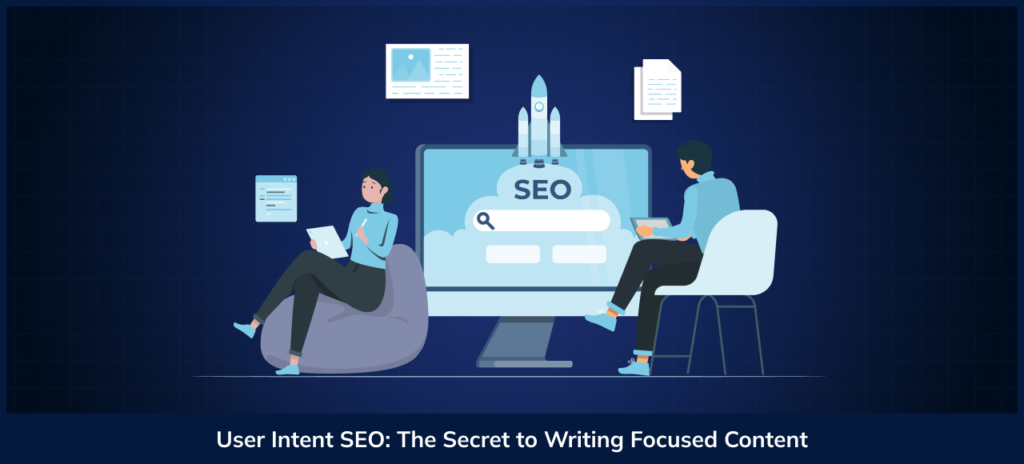
One of the most important parts of SEO content optimization is understanding search intent.
When someone searches for a topic, what are they actually trying to accomplish?
They may want to:
- Learn something
- Compare options
- Find a product
- Solve a problem
- Follow instructions
- Make a decision
Your content should match that purpose.
For example, someone searching “how to edit blog content” probably wants practical steps. Giving them a long history of blogging before explaining how to edit an article would not satisfy their immediate need.
Answer the user’s main question early.
Then provide additional context for readers who want more detail.
Improve Content Readability
Readable content is not necessarily simplistic content.
You can explain complicated subjects while still making them easy to follow.
Try to:
- Use straightforward language
- Keep sentences reasonably focused
- Explain unfamiliar terms
- Use active voice where appropriate
- Avoid unnecessary jargon
- Break complex ideas into steps
Read your article out loud occasionally.
It sounds slightly strange, but it works.
If you run out of breath halfway through a sentence or stumble over a phrase, the reader may struggle with it too.
Add Examples and Practical Details
Generic advice is easy to forget.
Practical examples make information more useful.
Instead of writing:
“Create better headlines.”
Explain what that means.
For example:
Weak:
“Tips for Content”
More specific:
“10 Content Editing Tips to Make Your Blog Easier to Read”
The second headline tells readers what the article offers.
Small examples like this can make an article feel more practical and less like generic SEO content.
Check Facts and Outdated Information
Content optimization is not only about keywords.
Accuracy matters.
Before publishing, check statistics, dates, product details, names, links, prices, and other information that can change over time.
This is especially important for:
- Technology
- Travel
- Finance
- Health
- Product reviews
- Software
- Business
- Current trends
If information changes frequently, schedule periodic content reviews.
An article that was accurate two years ago may not be accurate today.
Improve Internal Linking
Internal links help readers discover related content on your website.
For example, an article about content editing could naturally link to related articles about:
- SEO writing
- Content strategy
- Blogging
- Keyword research
- Content planning
- Content repurposing
The link should make sense in context.
Do not add links simply because you have pages that need links. Ask whether the linked page gives the reader something useful.
Update Old Content Instead of Always Starting From Scratch
Sometimes your best content opportunity is already sitting on your website.
Older articles may have good information but need:
- Updated statistics
- Better examples
- New sections
- Improved headings
- Updated links
- A stronger introduction
- Better formatting
- Removed outdated information
Refreshing useful existing content can be more practical than constantly creating new articles.
Before writing something completely new, check whether you already have an older article that could be improved.
Optimize Titles and Meta Descriptions
Your title needs to attract attention while accurately describing the content.
A good SEO title should be:
- Clear
- Relevant
- Specific
- Natural
- Helpful
Avoid exaggerated promises that the article cannot deliver.
Your meta description should also explain what the reader can expect. Think of it as a short invitation to click, not a place to repeat keywords.
Use Images Strategically
Images can make content more engaging, but they should support the article rather than simply fill empty space.
Choose visuals that help explain, demonstrate, or reinforce the topic.
Also remember basic image optimization:
- Use descriptive file names.
- Add useful alt text.
- Compress large images.
- Choose appropriate dimensions.
- Avoid unnecessary decorative images.
Alt text should describe the image meaningfully rather than becoming a list of keywords.
Make Content Mobile-Friendly
Many people read online content from their phones.
Before publishing, consider how the article will look on a smaller screen.
Check:
- Paragraph length
- Heading spacing
- Font readability
- Image size
- Tables
- Lists
- Buttons and links
A beautifully formatted desktop article can become difficult to read on mobile if the layout is not handled properly.
Common Content Editing Mistakes

Even well-intentioned editing can create problems.
Over-Editing
Sometimes writers edit until the content loses its personality.
Not every sentence needs to sound perfect. Natural writing can have a human rhythm.
Keyword Stuffing
Repeating the same keyword excessively can make content uncomfortable to read and does not create a better experience.
Removing Personality
Content should be informative, but it does not have to sound robotic. Small observations, examples, and natural explanations can make useful information more memorable.
Making Every Paragraph Short
Short paragraphs are useful, but breaking every sentence into its own paragraph can make an article feel fragmented.
Adding Information Just for Length
Longer does not automatically mean better.
If a paragraph does not add useful information, consider removing it.
A Simple Content Editing Checklist
Before publishing an article, run through this checklist:
| Editing Area | What to Check |
|---|---|
| Title | Is it clear and relevant? |
| Introduction | Does it quickly explain the topic? |
| Structure | Do sections follow a logical order? |
| Headings | Do they clearly describe each section? |
| Readability | Are sentences and paragraphs easy to follow? |
| Keywords | Are they used naturally? |
| Search Intent | Does the article answer the reader’s purpose? |
| Links | Are internal and external links useful? |
| Facts | Is important information accurate and current? |
| Images | Are images relevant and optimized? |
| Grammar | Are spelling and punctuation correct? |
| Conclusion | Does it provide a useful final takeaway? |
A Practical Three-Pass Editing Method

If editing an entire article feels overwhelming, use three passes.
Pass One: Structure
Look only at the big picture.
Check the introduction, headings, order of sections, missing information, and unnecessary sections.
Pass Two: Clarity
Now improve sentences and paragraphs.
Remove repetition, simplify complicated wording, strengthen transitions, and add examples where needed.
Pass Three: SEO and Final Checks
Finally, review the title, headings, keywords, links, images, metadata, formatting, and factual information.
This approach prevents you from getting stuck correcting tiny grammar issues before fixing bigger problems.
FAQ’S
1. What is content editing and optimization?
Content editing and optimization is the process of improving existing content for clarity, readability, accuracy, user experience, and search visibility.
2. Why is content editing important?
Editing helps remove errors, improve structure, reduce unnecessary wording, and make content easier and more enjoyable for readers to understand.
3. What should I check when editing content?
Check the structure, headings, grammar, readability, accuracy, repetition, search intent, keywords, links, images, and overall usefulness.
4. How can I optimize content for SEO?
Use relevant keywords naturally, match search intent, create clear headings, improve internal linking, write useful titles and descriptions, and keep information accurate and updated.
5. What is search intent in content optimization?
Search intent is the reason behind a user’s search. Content should provide the type of information, solution, product, or guidance the user is actually looking for.